Case study / Water recovery
A Water Recovery Challenge
How observing a pilot process led to a fully automated, triple-pass reverse osmosis system producing 40 gallons per minute at four times the original capacity.
When I was in the equipment business, my chemistry and engineering background often made me the “go-to” guy when a customer had a water treatment problem that didn’t have an off-the-shelf solution.
One day, a design-build company came to us with a particularly interesting challenge. Their client wanted to increase their production capacity by a factor of four. They had a process that used thousands of gallons of water to rinse their product, but they wanted to recover that water and use it again. They already had a pilot-scale water recovery system, and technically, it worked.
But there was a problem. The pilot system required a full-time operator to stand there and watch it—constantly monitoring what was happening and making adjustments to keep the system running properly. That wasn't going to work in the scaled-up system.
They needed us to accomplish three things:
Recover 95% of the process water so it could be reused.
Increase the throughput to four times its current capacity.
Automate the system so it could run unattended.
Understanding the process
So I spent some time watching the pilot system operate. I talked with the operator. I paid attention to what he was doing, what adjustments he was making, and—perhaps most importantly—why he was making those adjustments.
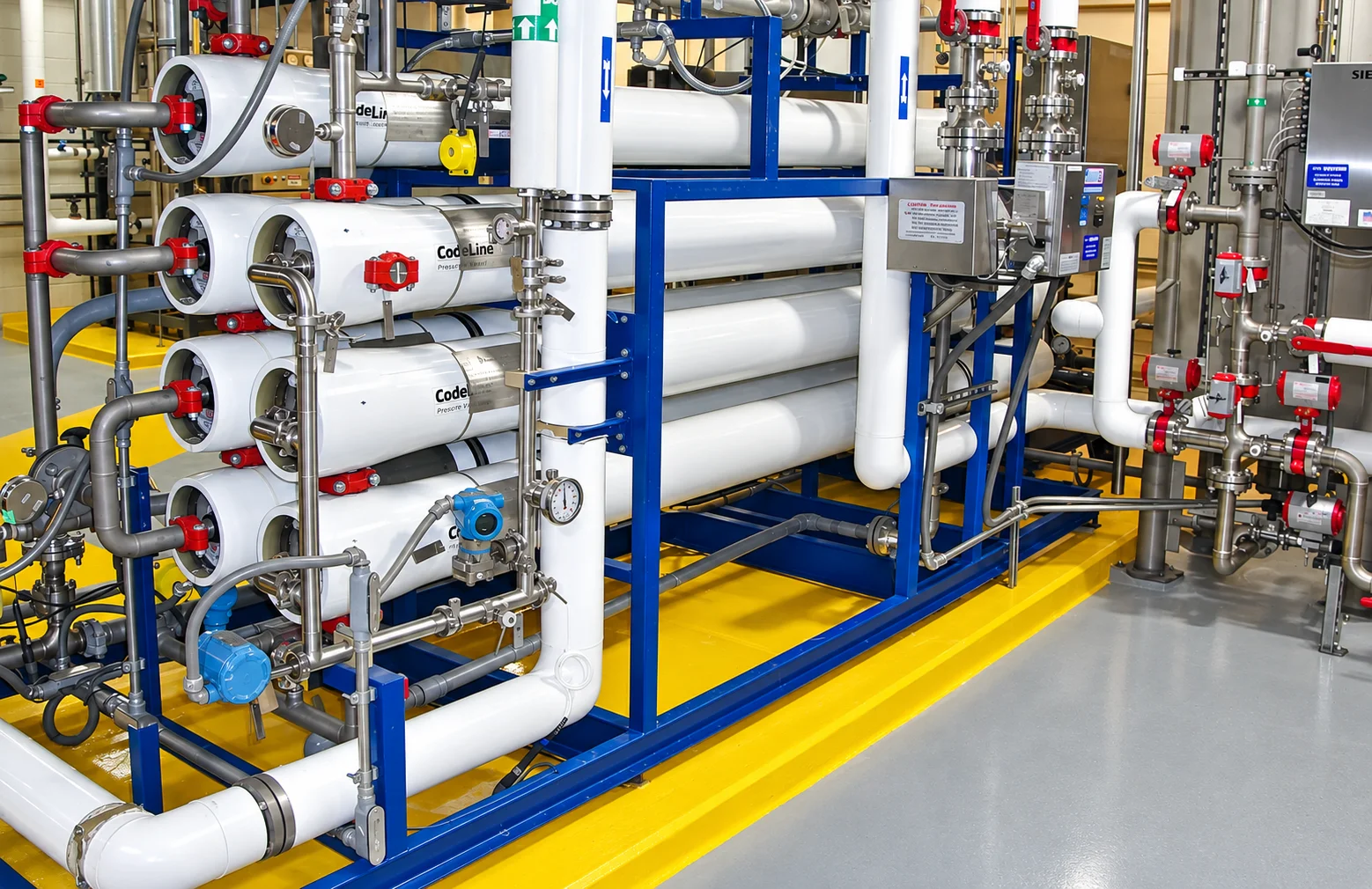
That gave me the information I needed. I went back to the drawing board and came up with a design that the client had never seen before—and something our company had never built before: a fully automated, triple-pass reverse osmosis system.
Understandably, the client was skeptical. The system we were proposing looked quite different from the pilot equipment they were familiar with. But I was confident in the design, so we offered them a performance guarantee.
The result
They gave us the green light. And it worked. The finished system produced 40 gallons per minute of triple-pass RO water, and it automatically adjusted itself as the feed water became more concentrated. What started as a pilot system that needed someone standing beside it, constantly making adjustments, became a system that could operate automatically at four times the original capacity.
For me, that project was a great example of what happens when you don't just look at the equipment—you closely observe the process, understand what's really happening, and then design the equipment around the process.